
This guide explains how stump grinding works, why it reduces regrowth, and how it helps prevent common pest issues in Sydney.
What is stump grinding, and what does it actually remove?
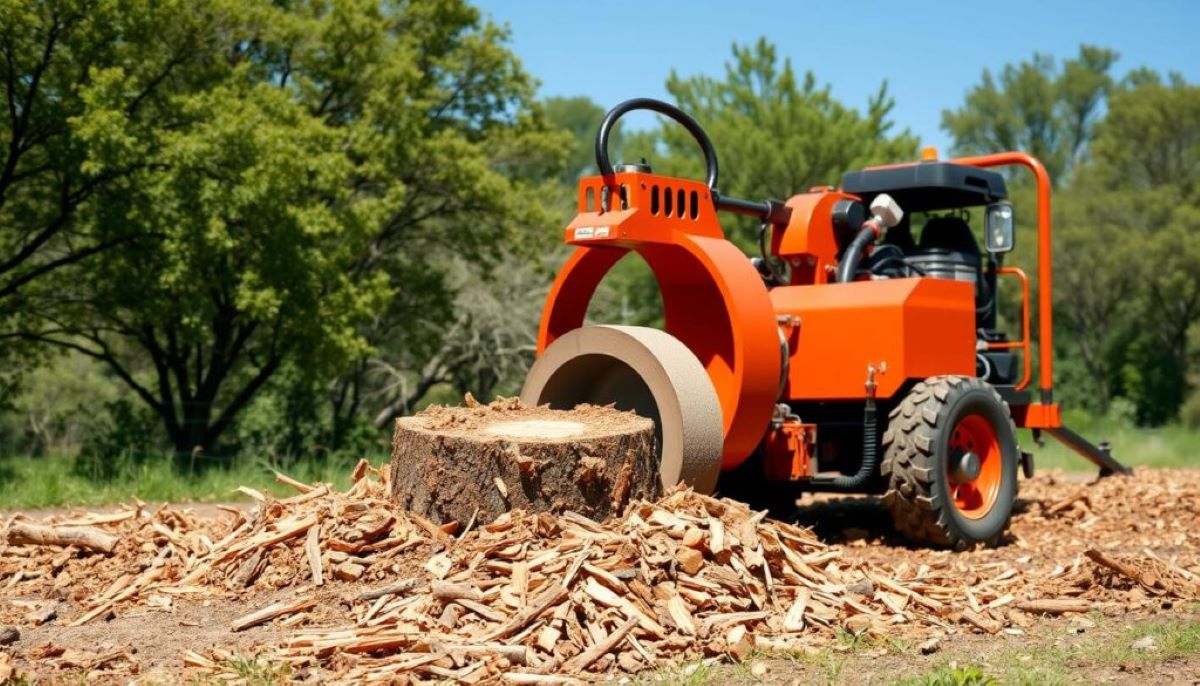
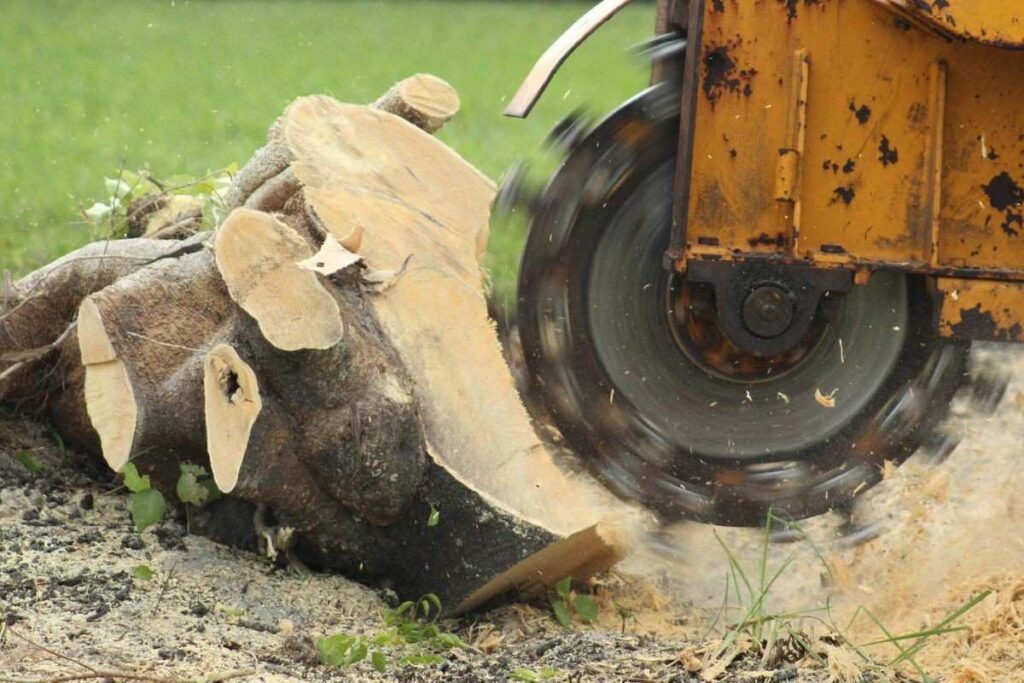
Stump grinding Sydney is the process of mechanically shredding a tree stump into small wood chips using a rotating cutting wheel. It removes the visible stump and typically grinds several inches to well below the soil surface.
What stump grinding Sydney does not remove is the entire root system. Instead, it destroys the stump’s growth centre and leaves roots to decay naturally over time, which is usually enough to prevent ongoing shoot production.
Why do tree stumps regrow in Sydney gardens?
Many trees and shrubs commonly found in Sydney can reshoot from the stump or root crown after cutting. They store energy in roots, then send up new shoots when the main trunk is removed.
Regrowth is most common when the stump is cut close to ground level but the crown remains intact. Moist soil, warm weather, and regular watering can make reshooting even more likely.
How does stump grinding prevent regrowth more effectively than cutting?
Stump grinding targets the stump base and root crown where new shoots typically originate. By turning that tissue into chips, it removes the structure that produces suckers and epicormic growth.
Cutting a stump flush often leaves the crown alive, so it can behave like a pruned plant and respond with vigorous new shoots. Grinding lowers the chance of that response because there is far less living tissue left to fuel it.
Does stump grinding kill the roots completely?
No, stump grinding does not “kill” every root. However, it usually removes enough of the stump and crown that roots lose the ability to generate new above-ground growth.
Roots may continue decaying for months or years depending on species and soil conditions. During that time, they can settle and create minor dips in soil, which is normal and can be managed with topsoil and turf repair.
What pests are attracted to old stumps in Sydney?
Old stumps can become a habitat and food source for several pest types. Wood-boring insects may move in as timber softens, and damp cavities can shelter cockroaches, ants, and spiders.
Termites are a major concern. While termites prefer certain moisture and timber conditions, stumps can provide a convenient food source and bridge point that increases activity in the yard and raises the risk of movement toward other timber materials.
How does stump grinding reduce termite risk?
Grinding removes the bulk of accessible timber at ground level, which reduces a common termite food source. It also helps remove the moist, sheltered zone where termites and other insects can establish and remain hidden.
It is not a standalone termite treatment, and it does not guarantee termites will not be present elsewhere. But it does reduce one of the most avoidable attractants and makes inspections easier because there is less concealed timber in the ground.
Can stump grinding help with fungal disease and rot spreading?
Yes, in many cases it can. Decaying stumps can host fungi that spread via root contact or spores, especially when the stump remains damp and shaded.
Grinding improves the situation by removing much of the infected wood and allowing the area to be backfilled and managed for drainage. If disease is suspected, they should avoid replanting susceptible species in the exact same spot until soil and root debris have broken down further.
See Also : How do we plant for a future climate? – AdaptNSW
How deep should stump grinding go to stop regrowth and pests?
Depth depends on the goal. For most residential yards, grinding below the soil line is enough to prevent tripping hazards and reduce regrowth potential.
If they want to re-turf, lay paving, or replant, deeper grinding is often recommended so the area can be backfilled properly. Deeper removal also reduces remaining timber near the surface, which helps limit pest harbourage.
What happens to the mulch, and should it be removed?
Grinding produces a mix of wood chips and soil. They can reuse it as mulch in garden beds, but it is often better not to use fresh stump grindings directly where they plan to replant a new tree.
As the chips decompose, they can temporarily tie up nitrogen in the soil. Many choose to remove some grindings and backfill with clean soil, especially if they want lawn to establish quickly or if the stump had signs of pests or fungal issues.
Is stump grinding better than stump removal in Sydney properties?
For most properties, stump grinding is faster, less disruptive, and more cost-effective than full stump excavation. Excavation removes more roots but usually requires heavier machinery and can tear up lawns, garden beds, and nearby paths.
Grinding is typically the practical middle ground: it eliminates the stump, reduces regrowth, lowers pest harbourage, and restores the area for landscaping with minimal damage. For a full overview, you can explore arborist services in Sydney and complete tree care for residential properties.
What should they do after stump grinding to prevent future issues?
They should backfill the hole with quality topsoil and compact it lightly to reduce settling. If the area is being turfed, they can add a small mound to account for natural sink as deeper roots decay.
They should also monitor for any new shoots over the next few months. If a species is known for aggressive suckering, quick removal of small shoots helps, and a professional can advise if additional root management is needed.
When should they call a stump grinding professional in Sydney?
They should call a professional when the stump is large, close to fences, retaining walls, paving, or underground services. Professionals can assess access, set the right grinding depth, and reduce the risk of property damage.
They should also seek help if termites are suspected, if there is extensive decay, or if the stump sits near structures. In those cases, coordinating stump grinding with pest inspection is often the safest approach.
What is the simplest takeaway for stopping regrowth and pests?
Stump grinding works because it removes the stump’s regrowth point and takes away a common pest habitat. It is not just a cosmetic clean-up. It is a preventative step that makes Sydney yards easier to maintain, safer to walk on, and less attractive to insects that thrive in decaying timber.
FAQs (Frequently Asked Questions)
What is stump grinding and how does it work to remove tree stumps?
Stump grinding is the mechanical process of shredding a tree stump into small wood chips using a rotating cutting wheel. It removes the visible stump and grinds several inches below the soil surface, targeting the stump base and root crown to prevent regrowth by destroying the growth centre.
Why do tree stumps often regrow in Sydney gardens after cutting?
Many trees and shrubs common in Sydney can reshoot from the stump or root crown because they store energy in roots and send up new shoots when the main trunk is removed. Regrowth is especially likely if the stump is cut close to ground level but the crown remains intact, particularly under moist soil, warm weather, and regular watering.
How does stump grinding reduce pest problems like termites in Sydney yards?
Stump grinding removes the bulk of accessible timber at ground level, reducing a common food source for termites and other wood-boring insects. It also eliminates moist, sheltered zones where termites and pests can establish, lowering pest harbourage and making yard inspections easier, though it is not a standalone termite treatment.
Does stump grinding completely kill tree roots?
No, stump grinding does not kill every root. However, it removes enough of the stump and root crown so that roots lose their ability to generate new above-ground growth. Remaining roots decay naturally over months or years and may cause minor soil settling that can be managed with topsoil and turf repair.
What should be done after stump grinding to ensure proper yard restoration?
After grinding, backfill the hole with quality topsoil and compact it lightly to reduce settling. For turf areas, adding a small mound compensates for natural sink as roots decay. Monitor for new shoots over subsequent months, removing any aggressively suckering species promptly. Professional advice may be needed for additional root management.
When is it advisable to hire a professional for stump grinding in Sydney?
Professional stump grinding is recommended for large stumps or those near fences, retaining walls, paving, or underground services where access is limited or property damage risk is higher. Also seek professional help if termites are suspected or there is extensive decay near structures to coordinate pest inspection alongside grinding safely.